7

Third-party risk management

Complete automation of the DORA information register

Learn more

Managing third-party risks is a strategic element to ensure service quality, operational continuity, regulatory compliance, and the protection of corporate reputation

Through a structured approach, Third-Party Risk Management (TPRM) enables the identification, assessment, and mitigation of risks—both in the context of Information Security, as required by specific regulations and/or standards/best practices, and for other risk profiles relevant to the sector (e.g., ESG)—arising from suppliers, commercial partners, distributors, agents, joint ventures, and other external collaborations.

An effective TPRM program requires cross-functional coordination among various organizational teams: legal and compliance, procurement, risk management, audit, contract management and commercial relations, as well as cybersecurity experts.

It is essential to define a clear operational and approval workflow, capable of monitoring operational, reputational, regulatory, and technological risks, and managing interactions with third parties in a transparent, proactive, and well-documented manner.

Implementing a solid TPRM program not only reduces risks but also creates safer and more sustainable relationships, contributing to the company’s resilience and success, in compliance with increasingly widespread and cross-cutting regulations (DORA, NIS2, GDPR), even when the company is not directly subject to them.

1 %
Reduction in vendor oversight time
1 %
Reduction in onboarding cycle times
1 %
Reduction in post-contract risk assessment
1 %
Reduction in reporting time

Source: ProcessUnity

Cybersel’s TPRM solution is based on a consolidated model supported by an integrated platform that simplifies the identification, assessment, and management of third-party risks, making the entire process more efficient, transparent, and compliant with regulations.

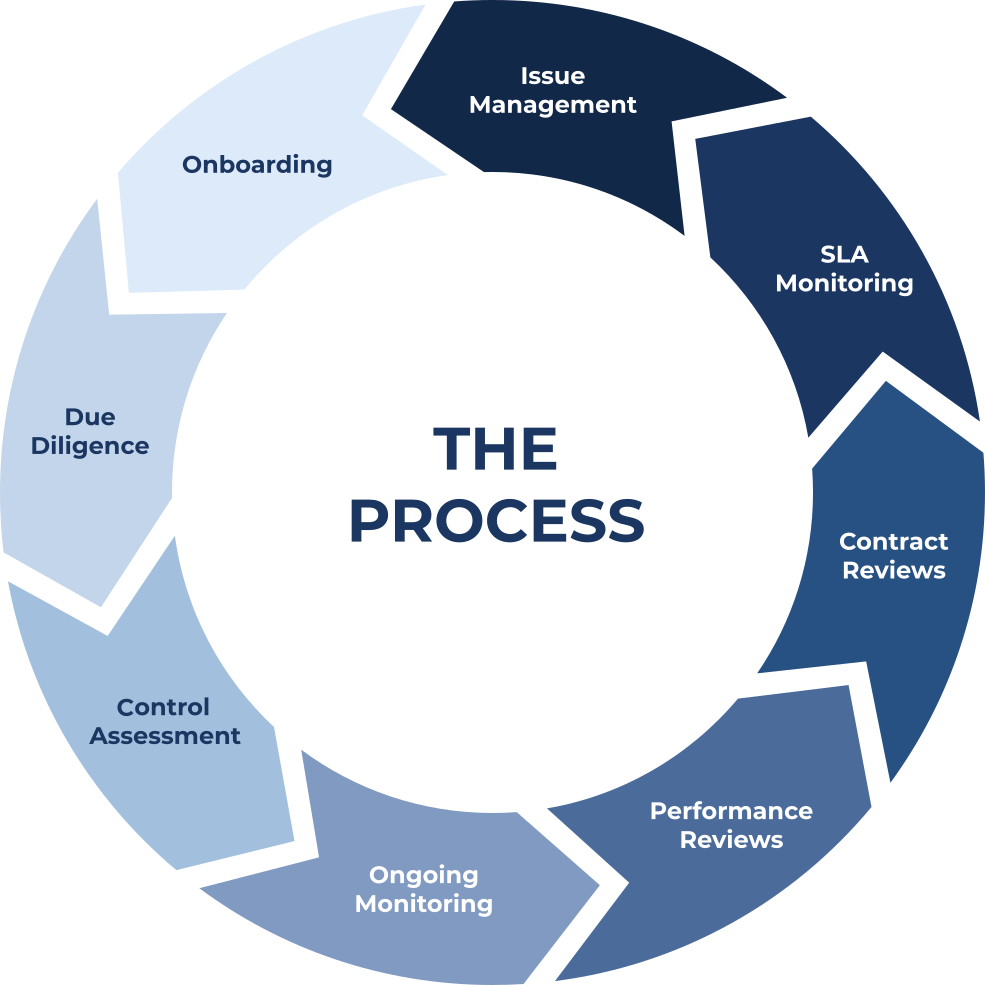
The process

For comprehensive management, our Managed TPRM Service transforms a complex process into a clear, secure, and regulatory-compliant operational workflow:

  • Collection of client requirements and support in defining the TPRM process (phases)
  • Training of client resources (if applicable and necessary) involved in executing the program
  • Definition of dynamic questionnaires (controls) to be sent to third parties, and development of models for measuring and managing results (risk assessment, gap/issue identification, and management)
  • On-site audits (in specific circumstances and upon explicit client request)
  • Monitoring of results (via configurable reports and dashboards) to evaluate third-party performance and the organization’s overall risk exposure

Full Automation of the DORA Information Register

Managing the DORA Information Register has become a strategic element to ensure full regulatory compliance, operational efficiency, and organizational resilience. With Cybersel’s solutions, it is possible to turn a regulatory obligation into a competitive advantage through the complete automation of key processes:

  • Digitalization of data collection
  • Creation of a unified data model
  • Automation of monitoring and compliance
  • DORA-specific reporting: Register of Information and Assessment Review
  • Data control and submission to the regulator

Investing in the automation of the DORA register not only ensures compliance with current regulations but also optimizes resources, improves process transparency, and increases the return on investment in compliance management.